
Concrete stain color chart
35 colors, photographed from the sample boards we hand you at the estimate.
Stain is different from every other finish on this site. It soaks into the slab and reacts with it rather than sitting on top of it, so the finished floor keeps the concrete's own variation and movement. That is the whole appeal — a stained floor looks like stone, not like paint.
It also means the same color lands differently on every slab. Age, cement content, porosity, how the concrete was finished and what has been spilled on it all move the result. The charts below are honest reference points, not guarantees, and we always test on your concrete first.
-
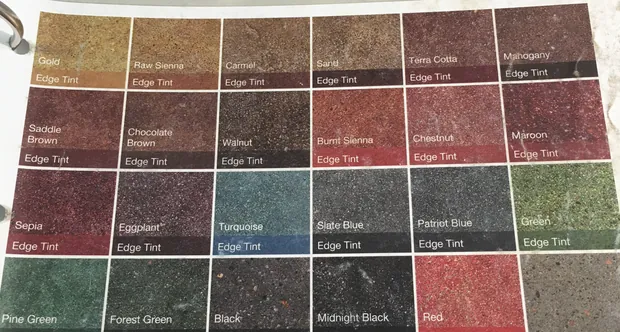
Twenty-four stock stain colors, shown on real concrete -
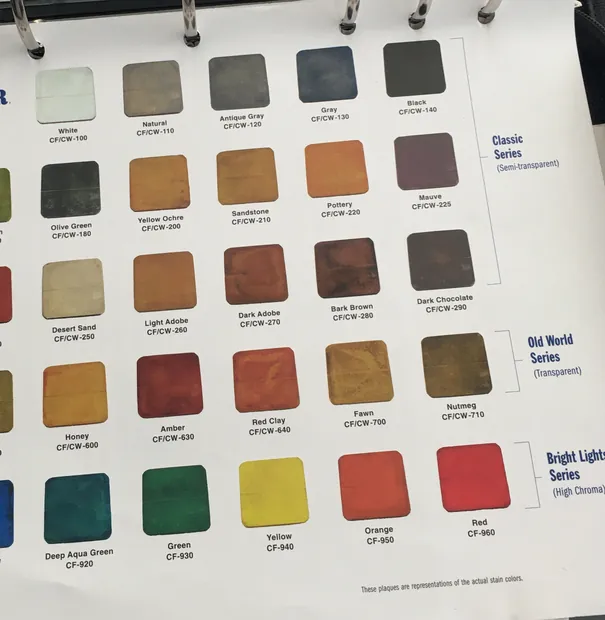
Classic, Old World and Bright Lights series
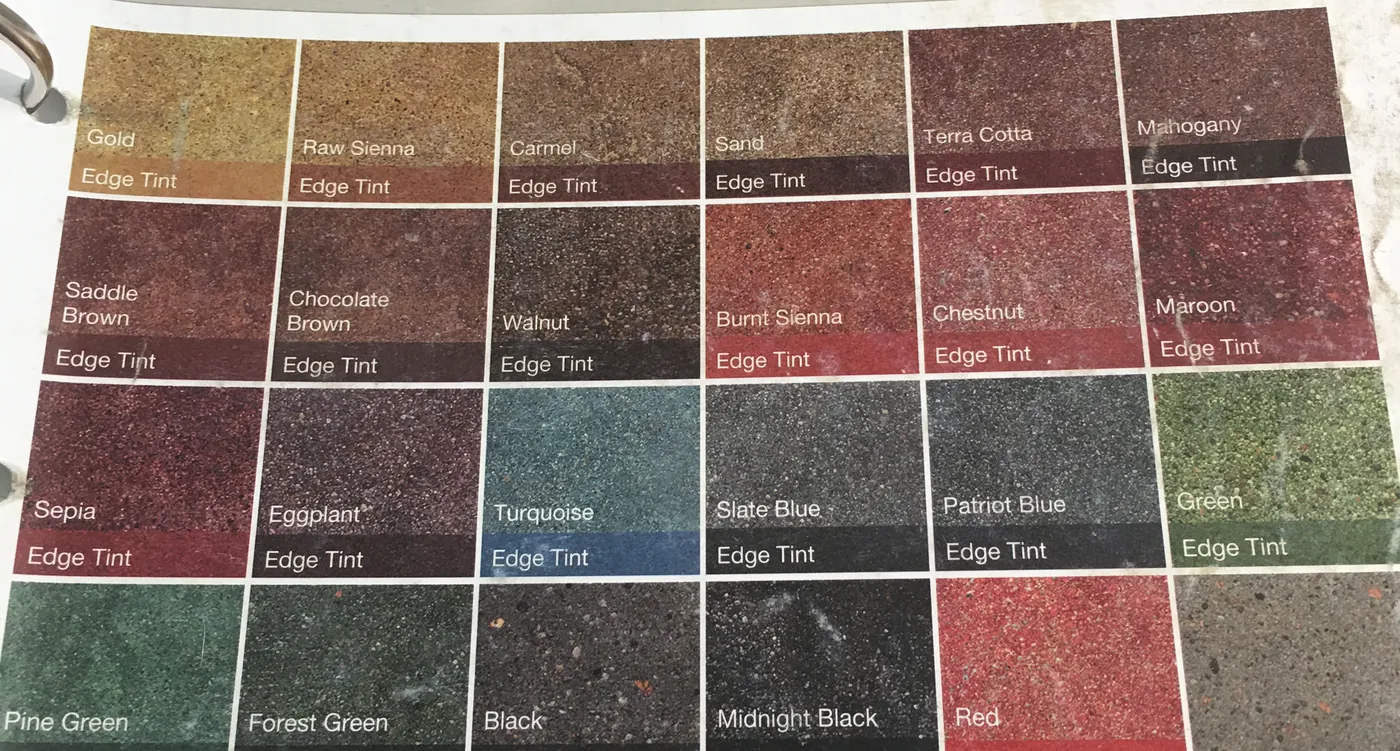
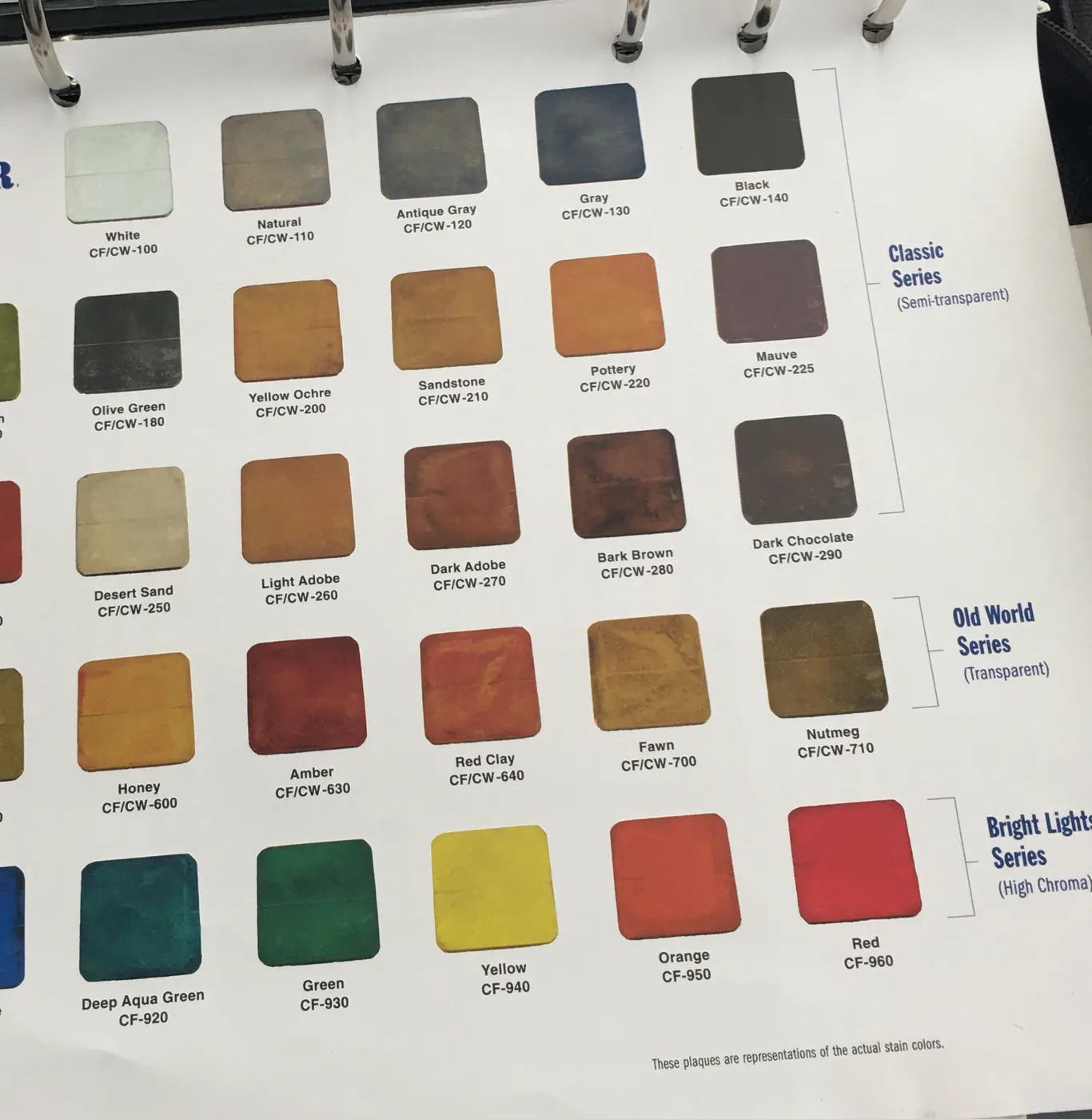
Stock stain colors
- Gold
- Raw Sienna
- Carmel
- Sand
- Terra Cotta
- Mahogany
- Saddle Brown
- Chocolate Brown
- Walnut
- Burnt Sienna
- Chestnut
- Maroon
- Sepia
- Eggplant
- Turquoise
- Slate Blue
- Patriot Blue
- Pine Green
- Forest Green
- Midnight Black
- Antique Gray
- Yellow Ochre
- Sandstone
- Pottery
- Mauve
- Desert Sand
- Light Adobe
- Dark Adobe
- Bark Brown
- Dark Chocolate
- Honey
- Amber
- Red Clay
- Fawn
- Nutmeg
Custom colors are matched to order — if what you want is not on the board, bring us the color.
Choosing a stain color
Earth tones — the golds, siennas, terra cottas, browns and chestnuts — are the most forgiving and the most requested. They read as natural stone, they take the slab's own variation gracefully, and they hide the everyday marks an interior floor collects.
The jewel tones and brights are real options but ask more of the slab. Turquoise, Patriot Blue, Eggplant and the high-chroma reds and greens are dramatic on good concrete and blotchy on poor concrete. We will tell you honestly which yours is.
Semi-transparent colors let more of the slab through and are the usual choice for a floor with character worth keeping. Transparent old-world tones layer over each other for depth. For a floor with patching or heavy staining underneath, a more opaque color or a microtopping first is the better answer.
Two colors can be layered, and edges can be scored and stained separately — the borders and inlays you see on our stained floors are done this way rather than with a different material.
Where we use these colors
Concrete stain color chart, questions
Will my floor look exactly like the color chart?
No, and no honest contractor will promise it will. Acid stain reacts with the minerals in your specific slab, so the same color can read bold on one floor and soft on another. We put a test patch down on your concrete before we commit to a color.
Can you stain an old driveway or patio?
Usually yes, and old concrete often takes stain beautifully because it has more character to work with. What matters is the condition, not the age. If the surface is spalling or heavily patched, a resurfacing or microtopping first gives the stain a sound surface to work on.
Can you match a stain to my tile or pavers?
We can get close, and layering colors gets us closer. Bring us a piece of the tile or paver and we will test against it on your slab rather than guessing off a chart.
Other color charts
- Epoxy flake color chart 15 colors
- Solid epoxy floor colors 15 colors
- Pool deck coating colors and textures 30 colors
- Sport court color chart 16 colors
A photograph of a sample is still a photograph — we bring the boards to your free on-site estimate and lay them on the concrete we are going to coat.
Found a color you like?
We will bring the boards out, lay them on your slab and price the job while we are there.