Staining is the one concrete finish that changes the color of the slab without putting a film over it. Paint and most coatings sit on top of concrete, and on an exterior slab a film is what eventually lifts. Stain goes into the surface, so it weathers rather than peels. That is why we stain driveways, patios, walkways and pool surrounds, and why a stained interior slab is one of the lowest-maintenance floors a Southern California house can have.
There are two families of stain, and homeowners in Temecula, Riverside and San Diego County are usually asked to choose between them without being told what the difference actually is. Here it is.
Acid stain: a reaction, not a paint
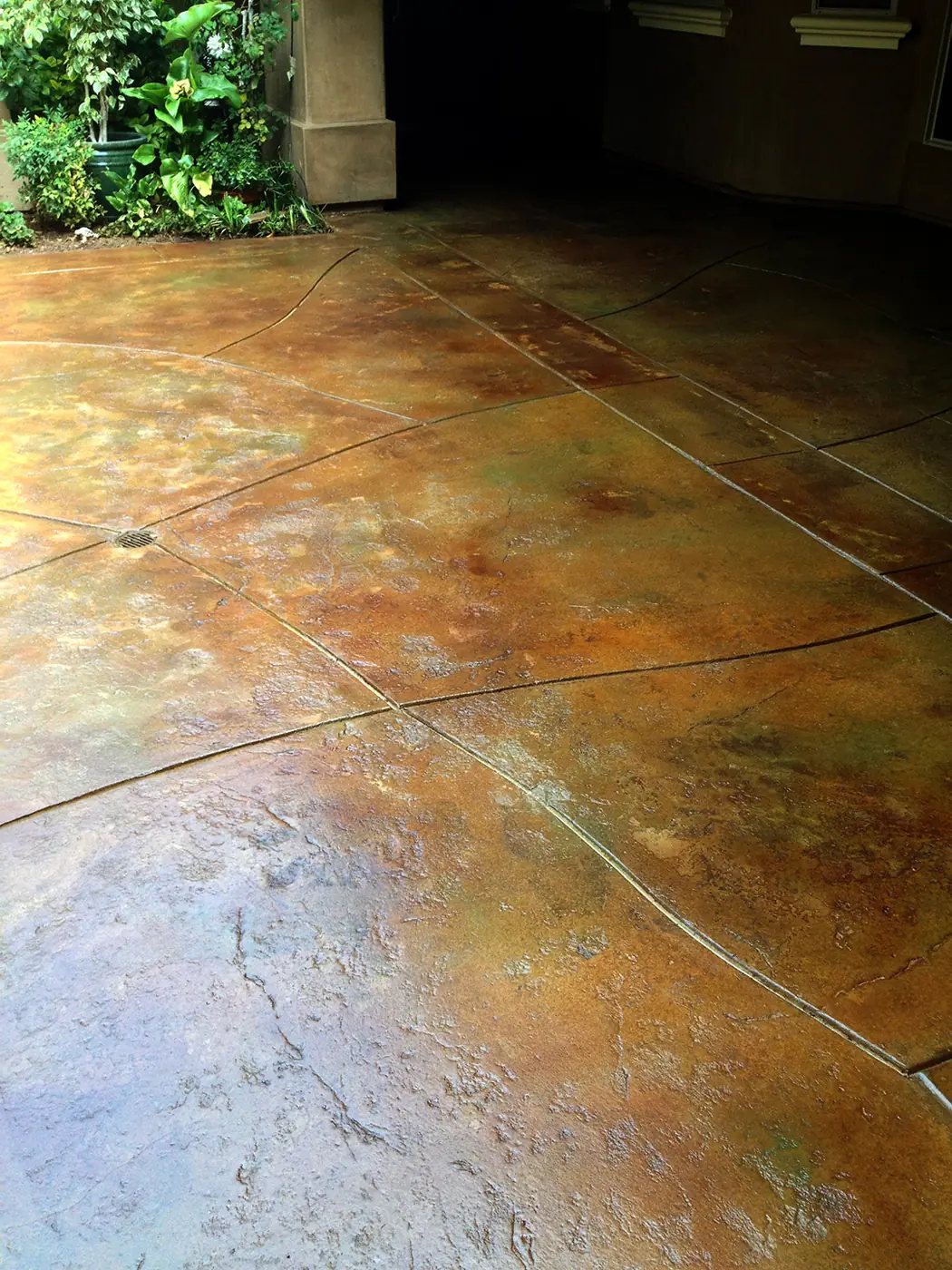
An acid stain is a solution of metallic salts in a mild acid. It does not color the concrete the way a dye would. It reacts with the lime in the cement, and that reaction produces the color. The result is mottled and variegated, with the same kind of movement you see in natural stone, because it depends on what is in the slab where the stain touches it.
That is both the appeal and the limit. No two acid-stained floors come out the same, and a sample on one slab will not tell you exactly what another slab will do. The palette is earth tones, warm to cool, and it stays there. If you want a specific even color, an acid stain is the wrong tool.
Acid stain needs a slab with enough free lime left to react with. New concrete takes it beautifully. Old concrete that has been weathered, power-washed and sealed for decades can react weakly or unevenly, and a slab with an old coating or heavy contamination may not react at all where the contamination sits.
Water-based stain: color that soaks in
A water-based stain carries pigment into the pores of the concrete. It does not depend on a chemical reaction, so it goes on more predictably and it is available in a much wider range of colors, including tones an acid stain cannot produce. It can be layered and blended, and it gives a more even finish where that is what the design wants.
It is also more forgiving of an old or unknown slab, because it is not relying on what is left in the cement. That makes it the usual choice on older exterior concrete and on any slab where we cannot be sure how an acid stain would take.
Its limit is the mirror of acid stain's strength. A water-based stain looks like a colored surface, even a beautifully done one. It does not produce the reactive variation that makes an acid-stained floor read as stone.
Preparation decides both
Stain is translucent. Whatever is left in the slab shows through it. Old sealer, oil, tire marks, sprinkler mineral deposits and the polished skin left by a power trowel all have to come off first, evenly, or the color goes on blotchy in a way you cannot fix afterwards. That is the same mechanical preparation we have been doing since 1976, and it is the reason stain jobs come out looking deliberate rather than accidental. It also means a slab with a failed coating on it needs concrete coating removal before staining is even a question.
Where the concrete is too damaged to stain well, spalled, patched in several colors, or badly pitted, an overlay is the better answer. A microtopping or overlay gives a fresh, uniform surface that can then be stained or integrally colored, and it can take a pattern. We talked through when a slab has crossed that line in resurfacing vs replacing concrete.
Choosing for the slab and the room
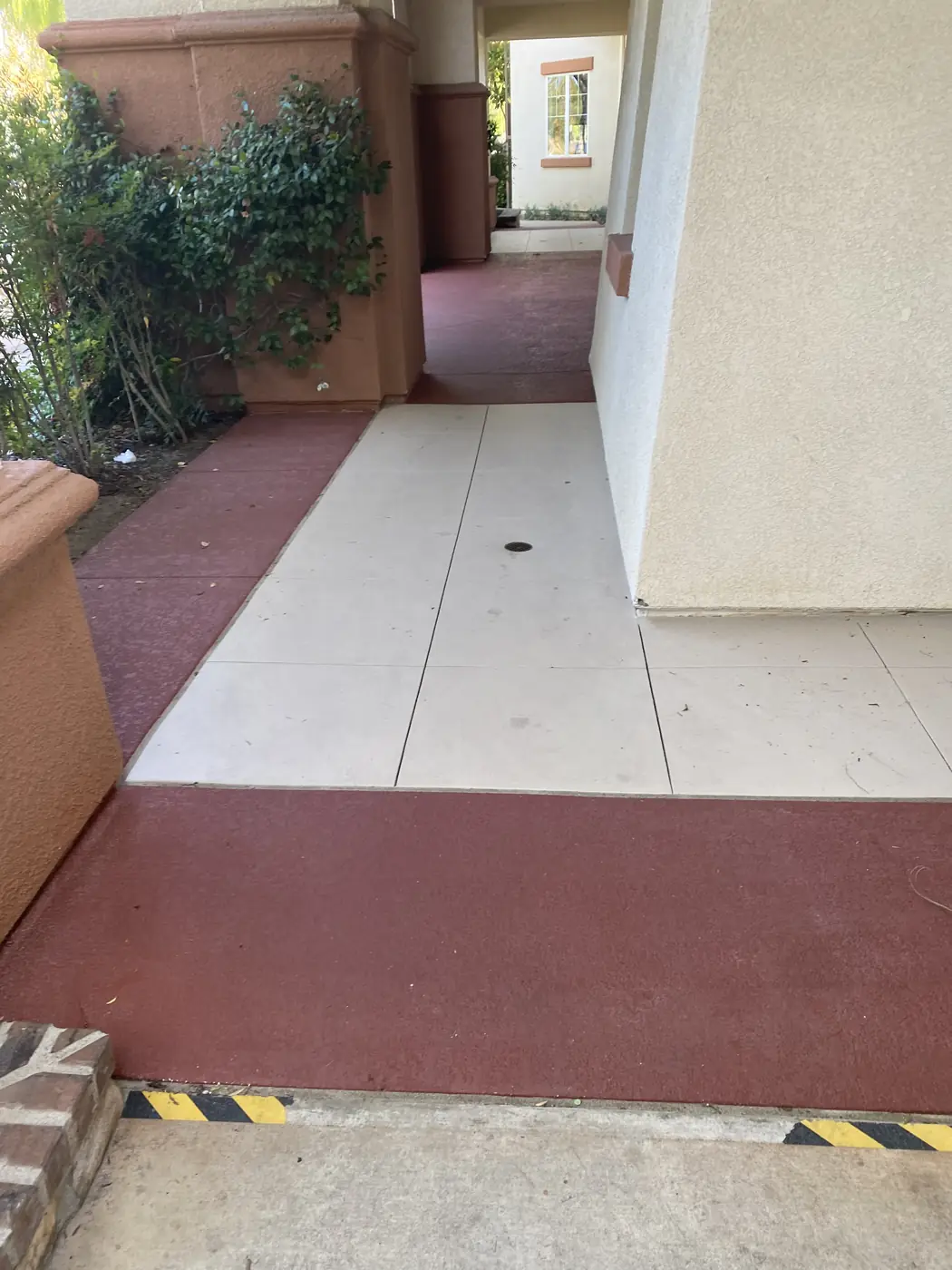
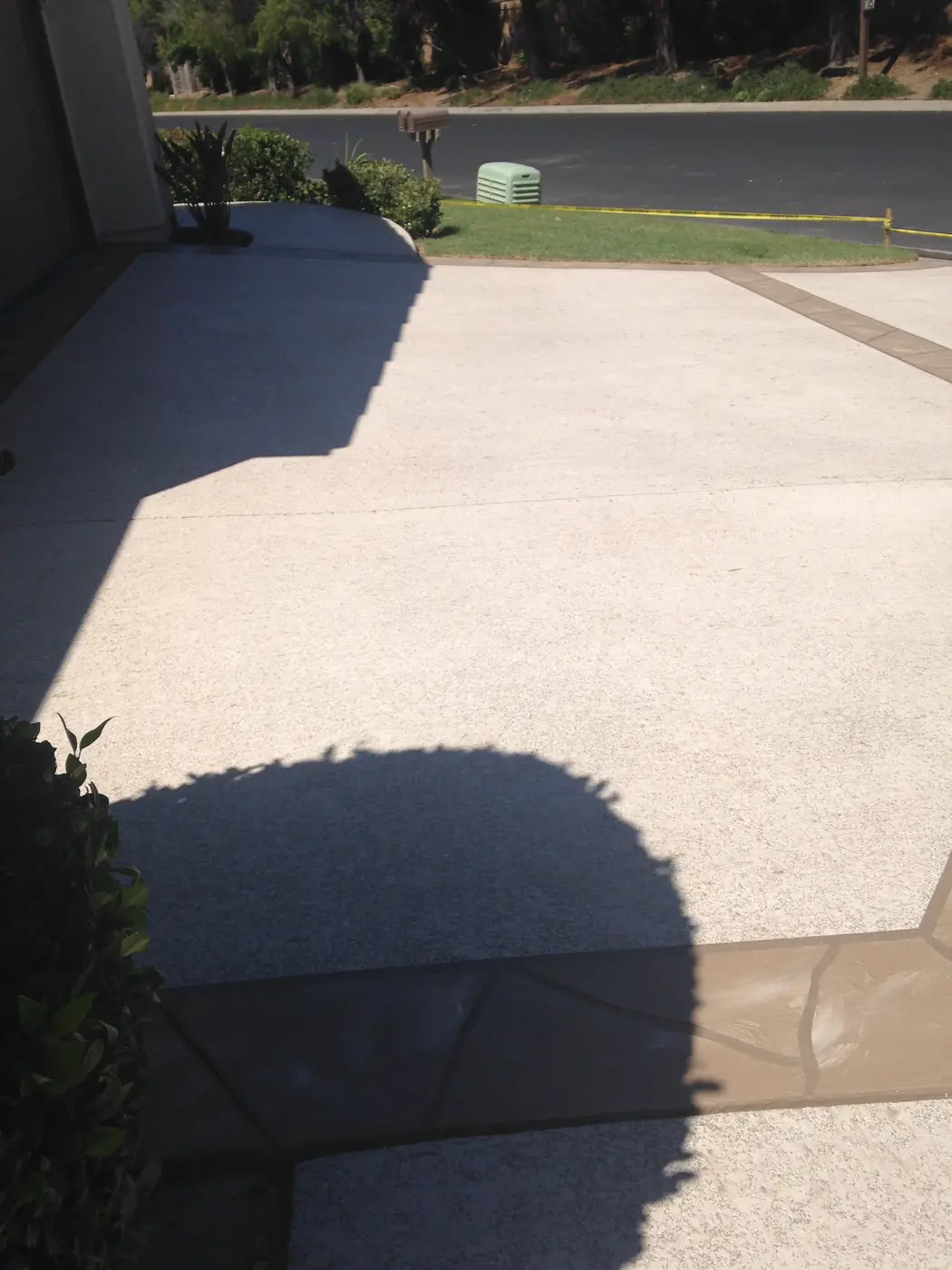
Driveways and walkways. Water-based stain in most cases, because driveways are old, weathered and contaminated with tire rubber and oil in a way that makes an acid reaction unreliable. Scored pattern lines in a tile, diamond or flagstone layout stop it reading as a colored driveway.
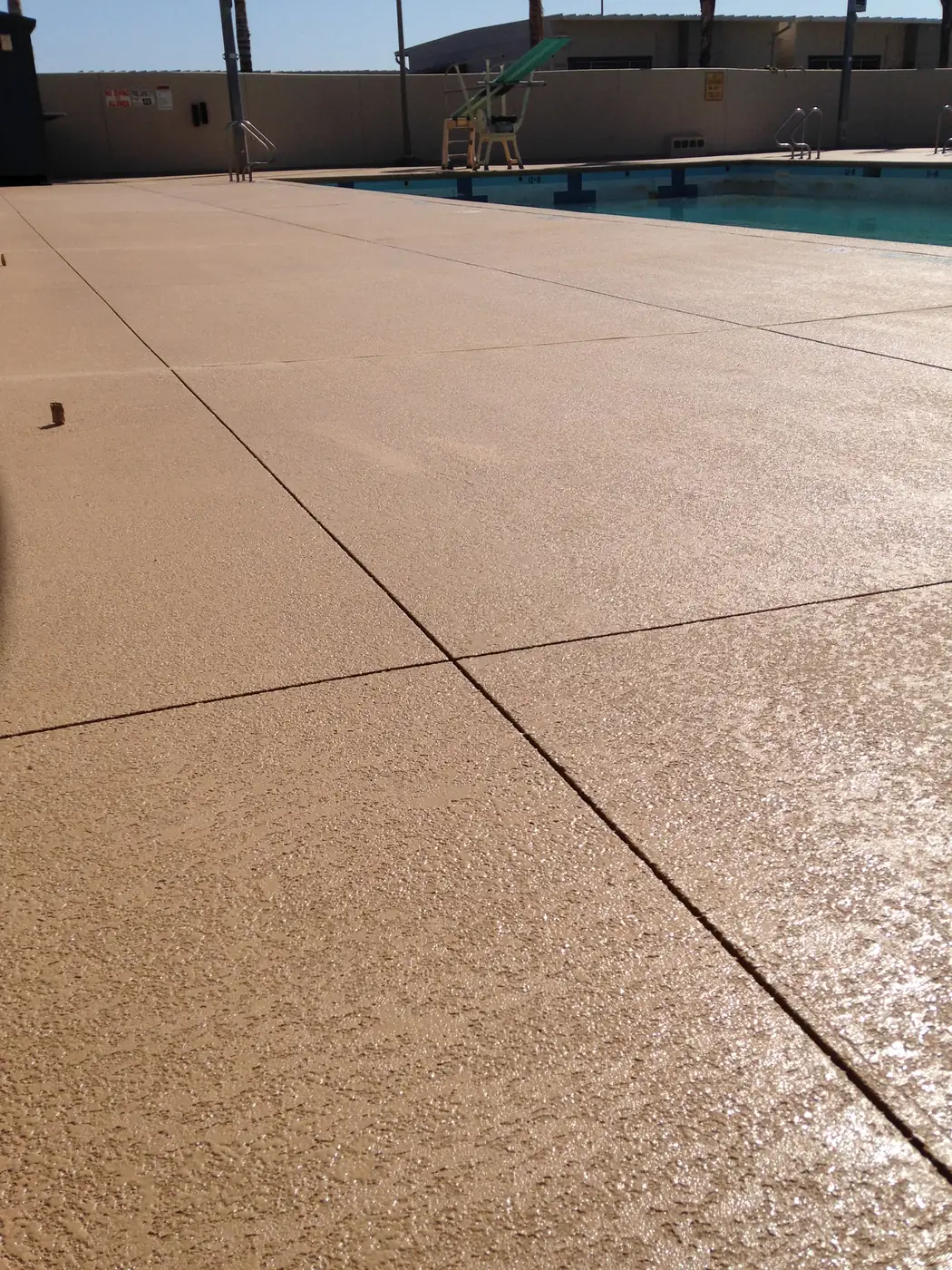
Patios and pool surrounds. Either. A newer patio takes acid stain well and the variegation suits an outdoor space. An older one is safer with water-based. On a pool deck, color choice is also a heat decision: a lighter tone stays cooler underfoot, which we covered in pool deck too hot to walk on.
Interior floors. This is where acid stain shines. Once the carpet or tile comes up, most Southern California homes have a slab that can be ground, stained and sealed into a finished floor that has nothing to scratch and nothing for pets to ruin. Acid stain gives the stone-like variation people want in a living room. Water-based is the choice where a client wants an even, specific color, or where the slab under the old flooring turns out to be patched or contaminated.
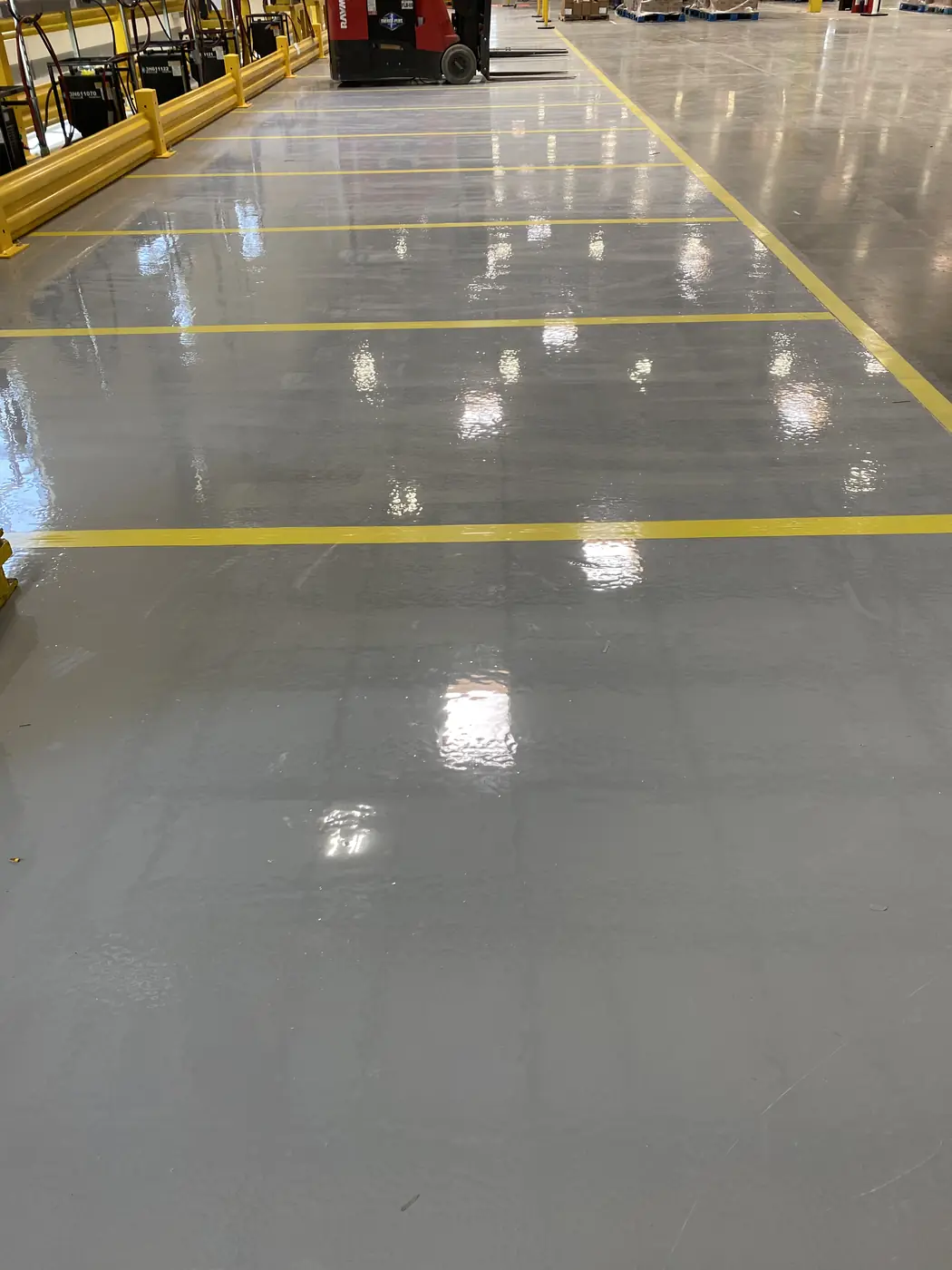
Commercial interiors. Both, depending on the look. Scored patterns, logos and two-tone layouts are cut and stained before the sealer goes down, and either chemistry can carry them.
The sealer is part of the job
On both types of stain, the color is in the concrete but the wear is taken by the sealer on top. Outdoors it protects the color from sun and sprinklers; indoors it takes foot traffic and furniture. Sealer is not an extra, and it is not optional. It can be recoated in a day years later without redoing the floor, which is most of why a stained floor is so cheap to live with.
Our honest steer
If your slab is new or in good condition and you want the variegated stone look, acid stain. If your slab is old, exterior, previously sealed or of unknown history, or you want a specific even color, water-based. If the slab is beyond staining well, an overlay first. We put a real sample down on your concrete before anything gets ordered, because the same stain reads differently on a twenty-year-old driveway than on a fresh pour.
See our exterior concrete staining and interior concrete staining pages for the process, or book a free on-site estimate. We work across Riverside, San Bernardino, San Diego, Orange and Los Angeles counties, our own crews do every stage, and the work carries five years on material and one year on labor.