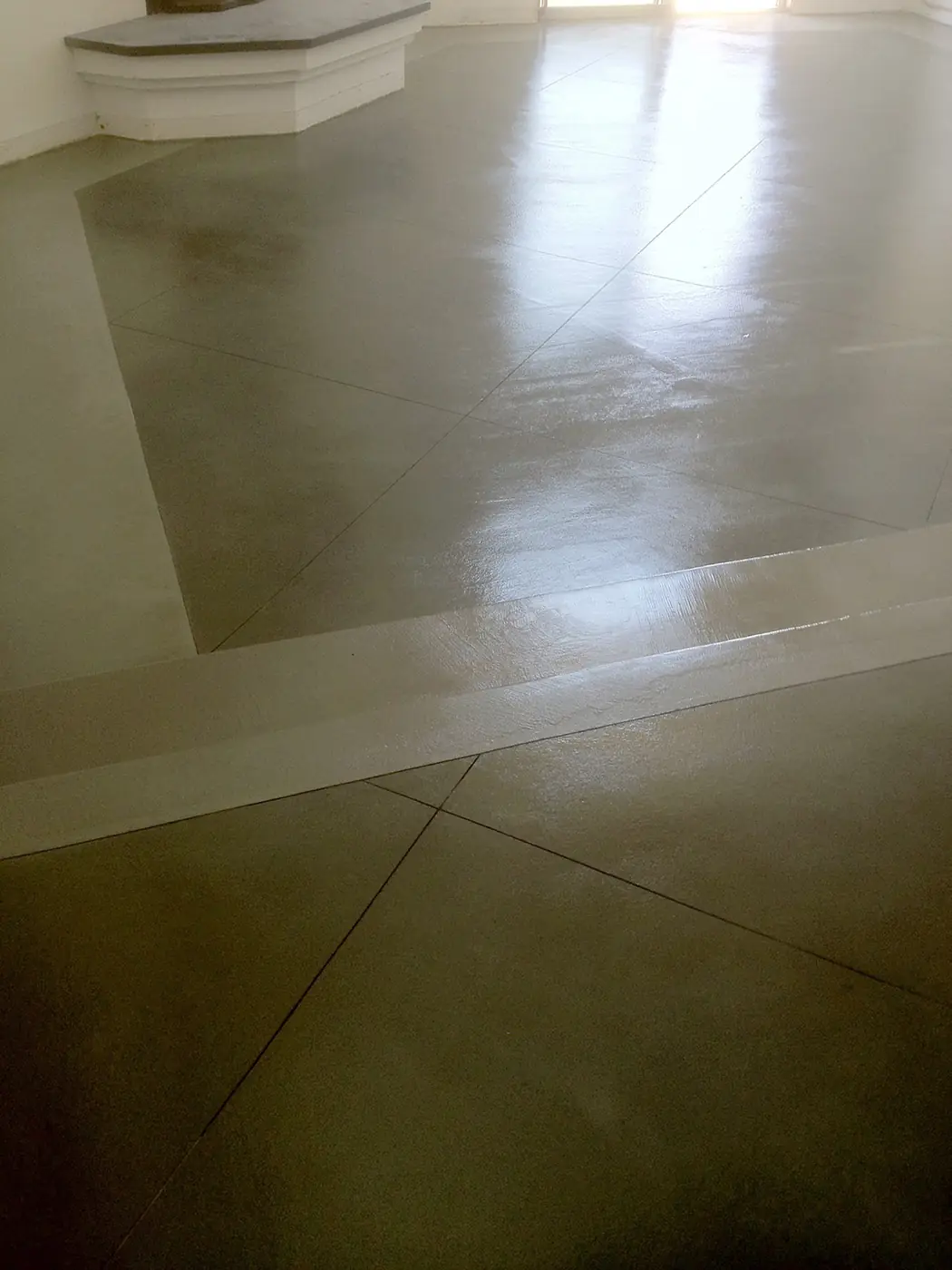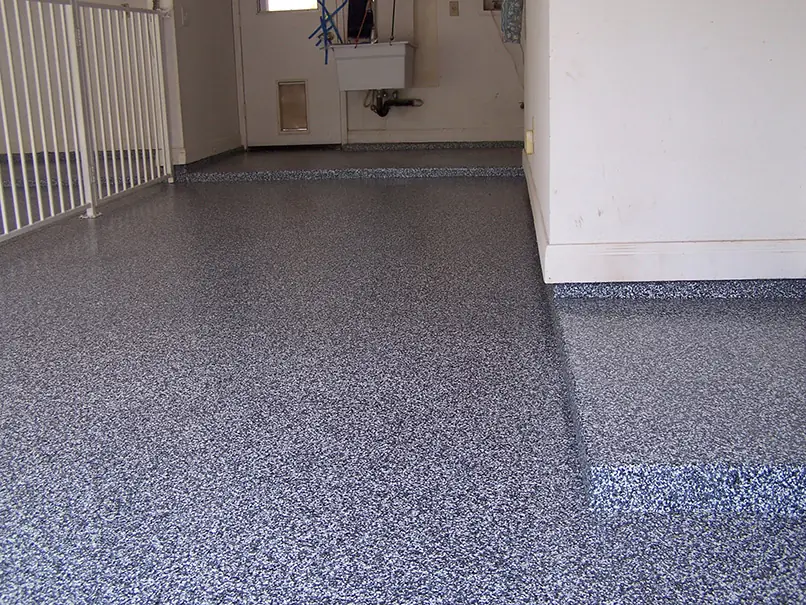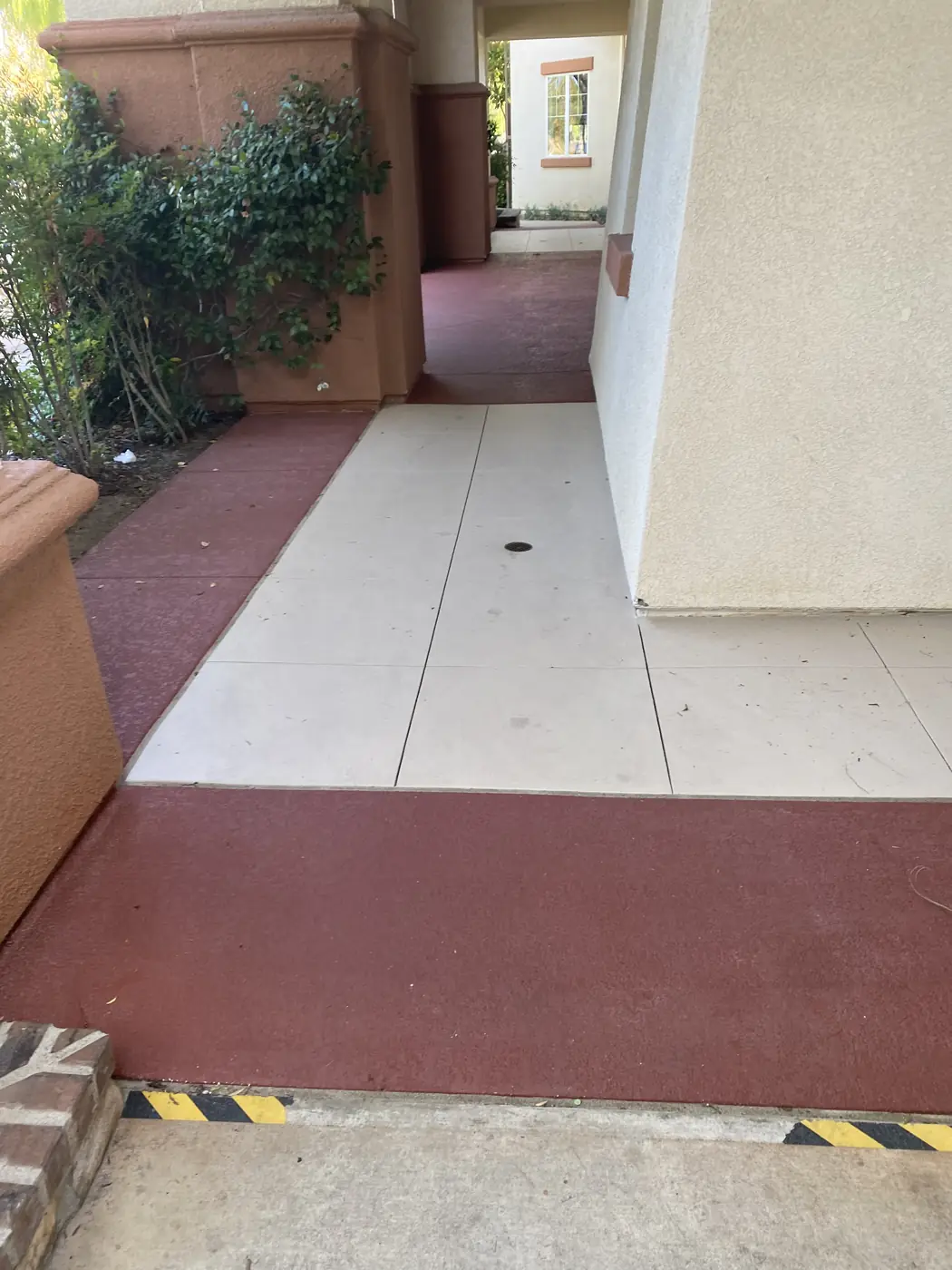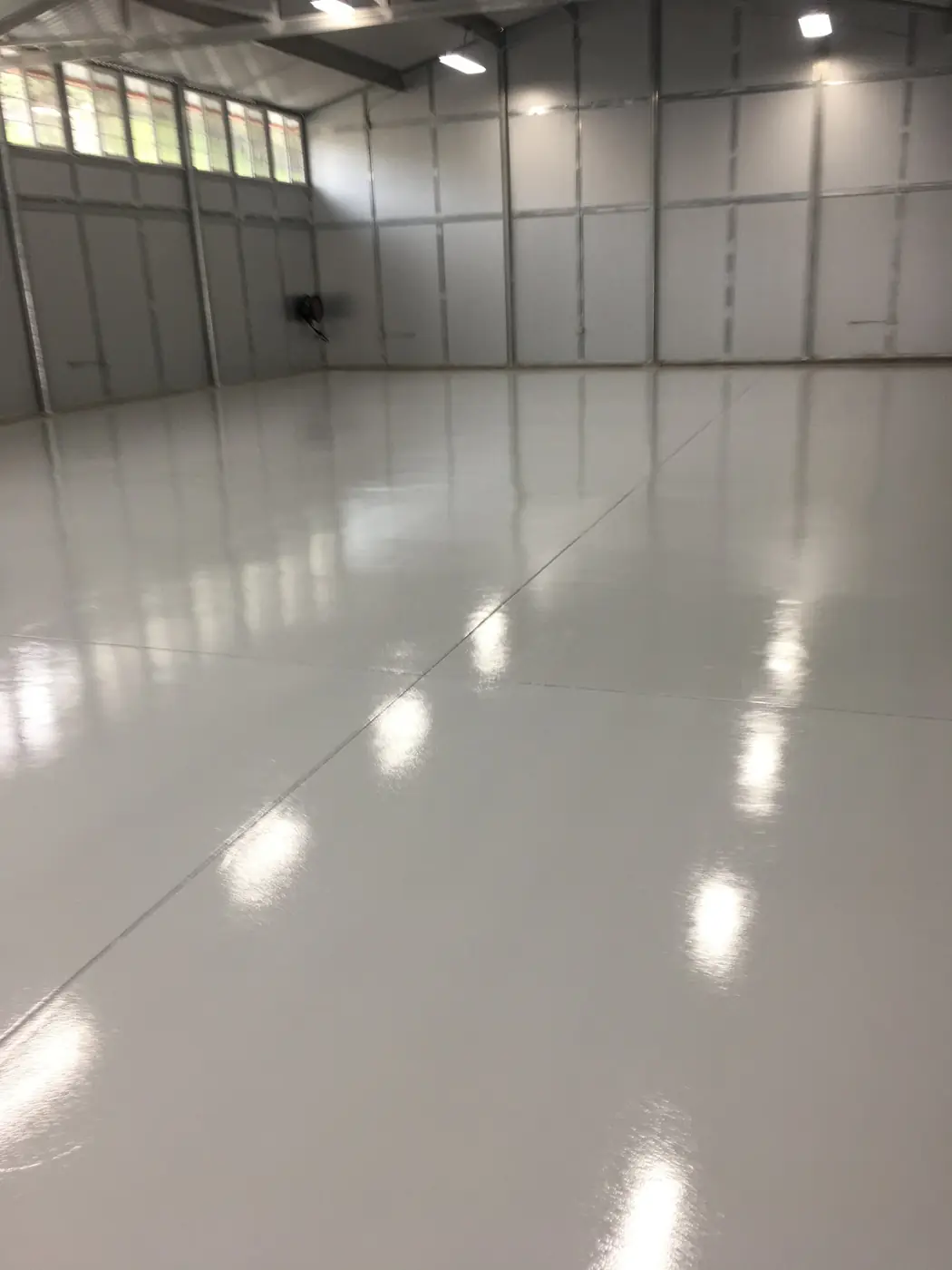
We get called out to strip failed garage floor coatings most weeks. Almost every one of them is the same story: a kit from a home improvement store, a Saturday of work, and a floor that looked excellent for about eighteen months before it started lifting in sheets where the car parks.
The epoxy in those kits is not usually the problem. The problem is what the instructions tell you to do to the concrete first.
Acid etching is not floor preparation
Nearly every consumer kit tells you to clean the slab and then etch it with an acid solution. Etching does open the surface a little. It does not open it anything like enough.
A coating does not stick to concrete by chemistry alone. It grips a mechanical profile — a rough, open surface with somewhere for the resin to key into. That profile is created by grinding, with a diamond grinder that takes the smooth, weak top layer off and exposes clean, sound concrete underneath. Acid cannot do that. It nibbles at the surface and leaves behind residue that has to be neutralised and rinsed, and if any of it stays, the coating is bonding to acid residue rather than to concrete.
That is why kit floors fail where the tires sit. A hot tire coming off a summer drive is soft and sticky, and it grips the coating. If the coating is only lightly attached to the slab, the tire wins. That failure has a name in the trade — hot tire pickup — and it is a bonding failure every time, not a product failure.
Oil does not come out with a degreaser
The second thing that kills a garage floor coating is contamination the homeowner could not see. A slab that has had a car on it for fifteen years has oil in it, not just on it. Concrete is porous, and a drip that landed in 2011 has soaked in and spread.
Degreaser and a stiff brush pull the surface oil. They do not pull what is down in the pores. Coat over it and the oil migrates back up into the bond line and pushes the coating off in patches. Those patches always appear in the same place — under the engine.
Grinding removes most of it because it removes the contaminated concrete. What is left gets treated before anything goes down. On a badly contaminated floor we will grind, treat, and then test a section before committing to the whole slab.
What proper preparation looks like
- The slab is mechanically ground with diamond tooling until the surface is uniformly open, not shiny and not patchy
- Cracks are chased out, filled and allowed to cure — not skimmed over
- Oil-contaminated areas are identified and treated separately
- Any existing coating is removed completely. See concrete coating removal — a new coating is only ever as good as what it is bonded to
- Slab moisture is checked, because moisture pushing up from underneath will lift a coating regardless of how well it is bonded on top
That last point matters more than most people expect, especially near the coast. We wrote about it separately in why coastal garage floors keep failing.
So is a kit ever worth it?
If you rent, if the garage is a workshop you do not care much about, or if you simply enjoy the job — a kit will give you a few good years. There is nothing wrong with that as long as you know what you are buying.
What you should not do is put a kit down expecting it to last a decade, and you should not put one down on a floor you intend to have coated properly later. Removing a half-failed consumer coating costs more than preparing a bare slab, because we have to take off what you put on before we can start.
What we do instead
Our garage floor coatings start with grinding, every time. Flake systems are the usual choice around here because they hide dust and tire marks, and dust is a fact of life across the Inland Empire. Solid colors look sharper but show everything.
Most single and double garages are a two-day job — grind and repair on the first day, coat on the second — and you get the drive-on date in writing rather than a vague estimate.
We have been preparing concrete since 1976 and we did it on tennis courts before we did it on garages. The preparation is the job. The coating is just what goes on afterwards.
If you have a floor that has already failed, or one you want done properly the first time, we cover the whole Inland Empire and San Diego County — book a free on-site estimate and we will tell you honestly what your slab needs.